EU, Enabel, Mercy Corps and NMB Foundation unveil Sh2.6 billion initiative to accelerate Tanzania’s electric mobility revolution
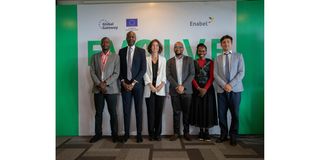
Representatives from Enabel, NMB Foundation, Mercy Corps and other project partners during the launch of the EVOLVE initiative.
Dar es Salaam. Tanzania's transition to cleaner and more sustainable transport has received a major boost following the launch of EVOLVE, a Sh2.6 billion (€872,580) initiative that will finance and nurture electric mobility businesses across the country.
The 24-month programme, officially launched in Dar es Salaam by Enabel, Mercy Corps and NMB Foundation, seeks to unlock the growth potential of start-ups and micro, small and medium-sized enterprises (MSMEs) operating in Tanzania's emerging electric mobility ecosystem.
Funded by the European Union under its Global Gateway strategy through the Tanzania Gateway for Transport, Trade and Environment (T-GATE) project, EVOLVE combines financial support with business development services to help entrepreneurs transform innovative ideas into sustainable enterprises.
EVOLVE, short for Empowering EV Ventures through Opportunities for Leveraged Value Addition and Expansion, is being implemented by Mercy Corps and the NMB Foundation in coordination with Enabel.
The programme is co-financed through a European Union grant administered by Enabel alongside investment from the NMB Foundation. The initiative comes at a time when Tanzania's electric mobility sector is experiencing rapid growth.
According to the Energy and Water Utilities Regulatory Authority (Ewura), following the release of the 2026 guidelines governing charging stations and battery-swapping infrastructure, the country now has more than 10,000 electric two- and three-wheelers on its roads.
Beyond electric vehicles themselves, entrepreneurs are increasingly investing in vehicle distribution, battery-swapping stations, charging infrastructure, maintenance services and other technologies that support the growing ecosystem.
While the sector presents enormous opportunities to reduce transport costs, create employment and stimulate green investment, many promising businesses continue to face one major challenge—limited access to suitable financing.
Young enterprises often struggle to meet the collateral requirements demanded by traditional lenders, while financial institutions remain cautious about investing in relatively new technologies and business models.
EVOLVE has been designed to bridge this gap by providing a combination of grants, credit facilities, technical assistance and business advisory services tailored to the different stages of enterprise growth.
Over the next two years, the programme will support 15 early-stage electric mobility start-ups while helping eight existing MSMEs expand and strengthen their operations.
In total, 23 enterprises will benefit from blended financing, entrepreneurship training, mentorship, market linkages and technical support aimed at improving business performance and investment readiness.
The initiative also places strong emphasis on increasing participation by women and young people across the electric mobility value chain, ensuring the transition to cleaner transport creates inclusive economic opportunities.
Launching the programme, Ms Virginie Hallet, the Country Director of Enabel in Tanzania, said EVOLVE reflects the T-GATE project's commitment to addressing practical challenges that limit the growth of Tanzania's transport sector.
"Tanzania already has entrepreneurs developing promising electric mobility solutions. The challenge is helping these enterprises move from promising ideas and small-scale operations to viable businesses that can serve more customers and attract investment," she said.
She added that the partnership between Mercy Corps and NMB Foundation combines enterprise development expertise with financial solutions that will enable businesses at different stages of growth to thrive.
Mercy Corps Tanzania Country Representative Anthony Sarota said financing alone is not enough to build resilient businesses.
"Entrepreneurs require more than finance. They need a clear understanding of their customers, sound operations, viable business models and connections to the right technical and commercial partners. EVOLVE will work directly with enterprises to strengthen these foundations and prepare them for growth," he said.
For his part, Mr Nelson Karumuna, the Chief Executive Officer of the NMB Foundation, said emerging businesses require financing models that reflect the realities of innovation.
"A start-up testing its first product has different financing needs from an established enterprise seeking expansion. EVOLVE enables us to support businesses according to their stage of development while helping them build the financial systems and records required to attract future investment," he said.
Beyond supporting individual enterprises, the programme is expected to strengthen collaboration among government, financial and training institutions including investors and private-sector players involved in electric mobility.
It will also generate evidence on financing models and business approaches that work best within Tanzania's electric mobility market, helping policy-makers and financial institutions better understand investment opportunities in the rapidly evolving sector.
EVOLVE is part of the broader Tanzania Gateway for Transport, Trade and Environment (T-GATE) project, which supports the country's transition towards low-carbon transport systems for both passengers and goods in Dar es Salaam.
Funded by the European Union through its Global Gateway strategy, T-GATE is being implemented by Enabel in partnership with UN-Habitat, TradeMark Africa and the Port of Antwerp-Bruges International, working closely with the Government of Tanzania.
As Tanzania continues to embrace cleaner transport technologies, stakeholders believe initiatives such as EVOLVE will play a critical role in developing innovative businesses, expanding access to finance and accelerating the country's transition towards a greener, more resilient and inclusive transport economy.