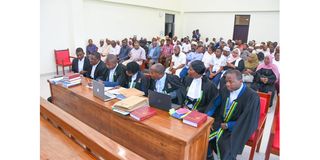
Unguja. A constitutional dispute has emerged at the Zanzibar High Court in cases filed by former ACT-Wazalendo parliamentary candidates from 19 constituencies in Unguja.
The dispute arose on Wednesday, January 14, 2026, before Judge Hajji Suleiman Khamis at the Zanzibar High Court in Tunguu, Unguja.
The legal arguments followed submissions by a senior state attorney from the Office of the Attorney General of the United Republic of Tanzania, who argued that the Zanzibar High Court lacks jurisdiction to hear parliamentary election petitions.
State Attorney Nalindwa Sekimanga, who is part of a team of lawyers representing the Government of the United Republic, cited various legal provisions, including Article 83 of the 1977 Constitution of the United Republic of Tanzania, which stipulates that all election disputes relating to Members of Parliament shall be heard by the High Court of Tanzania.
“We ask the Court to uphold the objection raised by the government side; the Zanzibar High Court does not have constitutional authority to hear cases relating to parliamentary elections of the Republic,” argued Sekimanga.
On their part, lawyers representing the former ACT-Wazalendo parliamentary candidates, led by Advocate Omar Said Shaaban, opposed the argument, saying the Zanzibar High Court has jurisdiction to hear cases relating to Union matters.
Mr Shaaban cited Article 93(1) of the Zanzibar Constitution and Section 3(1)(a) of Act No. 2 of 1985 as provisions that establish the Zanzibar High Court and confer jurisdiction upon it.
He told the Court that the jurisdiction granted is unlimited with respect to all matters and all laws applicable in Zanzibar, including those of the United Republic of Tanzania enacted by Parliament, such as the Election Act.
“Therefore, the jurisdiction of the Zanzibar High Court is neither removed nor limited by Article 83 of the Constitution of the United Republic at the level of the High Court,” argued Advocate Shaaban.
After hearing submissions from both sides, the Court adjourned the cases to January 27, 2026, for a ruling on the constitutional objection filed by lawyers from the Office of the Attorney General of the United Republic of Tanzania.