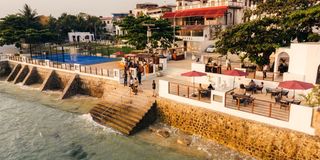
Zanzibar. Zanzibar’s hospitality and tourism sector has received a major lifestyle boost with the opening of what is being described as the island’s first dedicated Japanese restaurant — MARU Restaurant — at the newly completed Africa House Garden in Stone Town.
The restaurant introduces authentic Japanese cuisine to Zanzibar’s growing culinary and tourism market, offering a menu that includes sushi, sashimi and a variety of traditional Japanese delicacies aimed at both international tourists and local diners seeking premium dining experiences.
Located along Stone Town’s waterfront, Africa House Garden has rapidly emerged as one of Zanzibar’s newest lifestyle and leisure destinations, combining dining, entertainment and public recreational spaces overlooking the Indian Ocean.
The project is another completed and delivered development by Infinity Developments, the Dubai-based hospitality and real estate company behind several tourism and urban regeneration projects across Zanzibar.
Hospitality stakeholders say the opening reflects the changing profile of Zanzibar’s tourism industry, where visitors are increasingly seeking lifestyle-driven experiences that go beyond traditional beach tourism.
“The tourism market is evolving rapidly. Visitors today are looking for diverse experiences ranging from wellness and culture to international cuisine and waterfront entertainment,” a tourism stakeholder in Stone Town said.
Beyond expanding Zanzibar’s culinary offerings, the project is also creating employment opportunities for local residents, with the restaurant and surrounding facilities hiring primarily Zanzibari staff across hospitality, food service and operations roles.
Industry observers say such investments are becoming increasingly important in ensuring tourism growth creates wider economic participation and skills development for local communities.
The opening also highlights growing private sector investment in Zanzibar’s tourism and lifestyle infrastructure, particularly in Stone Town where developers are increasingly integrating hospitality, retail and leisure facilities into mixed-use waterfront developments.
Africa House Garden itself has become a significant addition to Stone Town’s hospitality landscape, attracting both residents and tourists through its oceanfront setting, entertainment spaces and dining concepts.
The latest development comes as construction continues on a new jetty adjacent to the garden, a project expected to further improve marine access and support tourism excursions, leisure boating and waterfront activities.
Analysts say investments in integrated lifestyle infrastructure are becoming increasingly critical as Zanzibar competes with other Indian Ocean destinations for high-value tourism and international hospitality investment.
Infinity Developments has in recent years expanded its footprint across Zanzibar through hospitality, heritage restoration and mixed-use projects aimed at supporting the islands’ growing tourism economy.
The company is currently involved in several major developments including Anantara Zanzibar Resort & Residences, NH Collection Pemba Wellness Resort, Infinity Hills and restoration initiatives within Stone Town.
With international tourist arrivals continuing to grow and investor interest rising, stakeholders believe projects such as Africa House Garden and Maru Restaurant could help further diversify Zanzibar’s tourism offering while positioning Stone Town as an emerging lifestyle and culinary destination within the Indian Ocean region.