Unguja. The Revolutionary Government of Zanzibar (RGZ) has assured investors that, despite ongoing challenges in securing a reliable electricity supply, it is taking major steps, including developing new power sources, to ensure consistent electricity across the islands.
The government has pledged that by 2028, Zanzibar will have no power shortages.
Currently, the islands receive electricity from mainland Tanzania via undersea cables.
On Unguja, one line installed in 1980 has a capacity of 45 megawatts, meeting up to 98.8 percent of demand, while a second line with 100 megawatt capacity operates at 97.3 percent, and both lines are now at maximum transmission.
Speaking during a visit to various power projects on Wednesday, March 25, 2026, Zanzibar Electricity Corporation (Zeco) Managing Director, Mr Mohamed Haji Haji, said the government has launched several projects, funded by donors and its own resources, to address electricity gaps.
He said a $64 million (Sh164 billion) contract has been signed with a US company to improve electricity infrastructure on Pemba Island, while on Unguja, a $159 million (Sh408 billion) contract with an Indian firm will construct a solar plant in Matemwe, expected to generate 30 megawatts by September.
“The second area is upgrading main transmission lines. In northern and southern Unguja, the 17-megawatt feeders have reached full utilisation,” Mr Haji explained.
To transmit sufficient electricity across the islands, he said, additional capacity is being added to the existing infrastructure.
He said the government is also investing its own funds to increase capacity from 17 to 30 megawatts in areas not fully covered by donor-funded projects.
According to Mr Haji, the Bambi projects are expected to generate 40 megawatts, with 20 megawatts available by July.
“The line from Bambi to Uroa is under construction to connect power generated there to the national grid, while the Matemwe plant will feed into the Mangapwani line, with 50 megawatts expected before year-end,” he said.
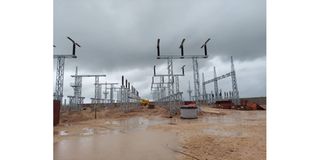
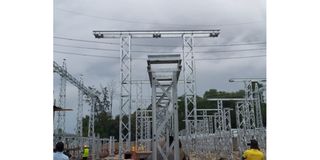
Electricity distribution station in Welezo, West Urban District in Unguja, photographed on Wednesday, March 25, 2026. PHOTO | ZULEIKHA FATAWI
He added that these projects, together with the expansion of wind power, will close current gaps.
Furthermore, he said the Makunduchi wind project is projected to generate 120 megawatts within eight months for integration into the grid.
“The government also plans to install batteries to store electricity from Bambi and Makunduchi, ensuring supply during periods of low solar or wind output,” Mr Haji emphasised.
Zanzibar’s Minister of Water, Energy and Minerals, Mr Nadir Abdulatif Alwardy, said the ongoing projects are expected to resolve electricity challenges and thanked the Ministry of Finance and Planning for supporting funding and implementation.
Finance Minister Juma Malik Akili said the visit aimed to review the progress of budgeted projects for the 2025/26 fiscal year.
He expressed satisfaction with the progress and said new areas for funding will be considered in the next fiscal year.
Mr Haji noted that Zanzibar currently depends on a single power source, highlighting the importance of increasing generation capacity.
He added that the new projects are funded through the World Bank in partnership with the Zanzibar government.