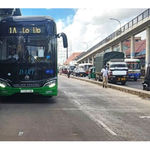
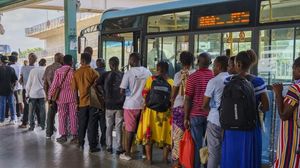
Dar es Salaam. The Dar Rapid Transit Agency (Dart) management has said it is considering to introduce facial and palm recognition technology for Bus Rapid Transit (BRT) passengers as the agency seeks to increase access and address mounting losses linked to its current smart card ticketing system.
The proposed biometric system, which would allow commuters to access buses using their faces or palm prints, is currently at the planning stage and is intended to complement, rather than replace, the existing smart card system.
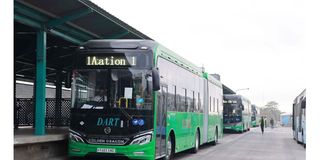
“We are preparing people first. We have not started implementation yet, but that is where we are heading,” Dart’s Chief Executive, Mr Said Tunda, said in an interview.
Mr Tunda explained that passengers would undergo a one-time biometric configuration, after which they would receive a permanent control number linked to their account.
Once registered, commuters would be able to top up their fare accounts through mobile money platforms and other digital payment systems without necessarily depending on physical cards.
“The system will be able to identify that a passenger travelled on a particular day, accessing the gate through either their left or right palm or facial recognition. Smart gate will automatically open once the passenger approaches,” he said.
According to Mr Tunda, the technology is aimed at increasing convenience for passengers, particularly those who frequently lose or forget their cards.
The move comes as Dart struggles with low utilisation of its smart cards despite significant investment in the costly smart cards.
Mr Tunda revealed that the authority had invested about Sh2 billion in the smart card system but recovered only around Sh400 million, leaving a deficit of approximately Sh1.6 billion.
He said the agency incurs a loss of about Sh5,000 in each card which is sold for Sh1,000.
Although about 430,000 cards have already been distributed, fewer than 200,000 are currently active in the system, according to the agency.
Mr Tunda attributed the situation partly to commuter behaviour and slow adaptation to the system.
“It is a behavioural change issue. People will gradually understand and adopt the system. These things come out after a process,” he said.
He, however, declined to disclose the total number of cards initially procured by the authority.
When asked whether the card system had been a mistake, Mr Tunda avoided directly criticising earlier decisions.
Speaking on the proposed system, Land Transport Regulatory Authority Consumer Consultative Council (Latra CCC) Head of Finance Ms Fatuma Kulita, raised concern over the practicality and user-friendliness of the proposed biometric payment system being considered by the Dart for commuters.
“I am struggling to comment positively because I do not yet know whether the system will be user friendly because it may sound good in theory but the requirements for accessing the service would become difficult for passengers,” she said.
Ms Kulita questioned how the registration process would work for commuters arriving unexpectedly or travelling occasionally.
“Introducing complicated systems without proper preparation could create operational challenges similar to those experienced with previous transport payment systems,” she said.
“There are people who travel daily and others who may have just arrived from upcountry and need immediate access to transport.
How long would it take to scan them and enter all their details into the system? Will there be enough machines to scan everyone? Will the process truly be easy and efficient,” she said.
“Otherwise, we may end up introducing systems that eventually become difficult to operate,” she added.
Despite the concerns, Ms Kulita said was waiting to receive more detailed explanations from Dart on how the system would function in practice.
Tanzania Road Safety Initiative (TARSI), Executive Director, Mr Maliki Barongo, believes the biometric approach could help to reduce operational losses associated with producing physical cards at high cost and selling them at subsidised prices.
Another transport official who was interviewed in connection to the new system, raised reservations about whether the system would be practical for ordinary commuters.
The official, who declined to be named, said it was still unclear whether the proposed technology would be accessible and convenient for all users.
Register to begin your journey to our premium contentSubscribe for full access to premium content