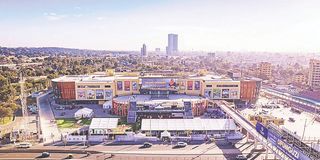
Dar es Salaam. The government and the East African Commercial and Logistics Centre (EACLC) have sought to allay concerns that the newly established China-linked business centre could undermine established markets, particularly Kariakoo, insisting that the facility is intended to complement, rather than replace, existing trading hubs.
The assurance follows concerns raised by some traders who fear the commercial centre could divert customers from traditional markets and create unfair competition if foreign businesses dominate the local retail sector.
The shopping mall which started operations recently, is designed to accommodate over 2,000 shops across multiple commercial zones, including international brands, regional traders, wholesalers, retailers, and import–export operators.
Some traders fear that the centre could compete with hubs like Kariakoo which serve traders from both Tanzania and neighbouring countries.
Others complain of renting cost at the centre and that travelling to China could stop.
Chairman of the Dar es Salaam Traders Association, Yusuph Yenge, said Tanzania should continue opening its economy to foreign investment while ensuring local businesses remain the primary beneficiaries.
"Tanzania has access to markets in SADC, Comesa and the East African Community. We cannot stop travelling to China to source goods for markets across those regional blocs," he said.
He added that Chinese investors should focus on industrial development and manufacturing rather than competing directly with local traders.
"Chinese investors should come here to invest, but Tanzanian traders travelling to China is an advantage because they learn new technologies and bring that knowledge back home," he said.
Mr Yenge also expressed concern over rental charges at some newly established commercial centres, saying high costs of up to Sh1 million per stall per month could discourage traders from taking up available space.
Referring to the experience of traders at Ubungo, he said rents that were initially presented as affordable later increased significantly.
"A new market takes time to establish itself. Customers need to develop confidence before businesses can thrive. I advised them to begin with lower rents to attract traders. Once the shops are occupied and businesses become stable, rents can gradually increase, but currently the charges exceed Sh1 million," he said.
According to Mr Yenge, lowering rental charges to around Sh500,000 at the beginning, would encourage more traders to occupy the centre, creating the critical mass needed to attract customers.
"The solution is to reduce rental costs so more traders can move in. That will create business activity, attract customers and help the mall grow," he said.
Government allays fears
However, the government says its investment strategy is aimed at attracting capital while ensuring Tanzanian entrepreneurs benefit from new business opportunities.
Minister for Industry and Trade Judith Kapinga told The Citizen that while investors naturally pursue commercial interests, the government remains committed to striking a balance between attracting investment and safeguarding local businesses.
"Investors have their own interests, but we need to strike a balance. These are private-sector investors, and these are malls where rent is charged per square metre. Traders need to fully understand what is happening," she said.
Ms Kapinga said Tanzania's position as a regional trade hub requires policies that encourage investment without sidelining local entrepreneurs.
"We must protect the interests of Tanzanians while also promoting investment. We are currently reviewing regulations because Tanzania is a hub serving more than eight landlocked countries," she said.
Meanwhile, EACLC management said it has invested heavily in marketing campaigns, including partnerships with influencers and artists, to raise awareness of the China Business Centre and attract customers from Tanzania and neighbouring countries.
An EACLC representative, Ms Victoria Momburi, said about 60 percent of the centre's retail spaces have already been leased.
"We have invested heavily in promoting this market because we want local traders to attract more customers," she said.
She said competition between commercial centres is a normal part of business and does not necessarily threaten established markets.
"Look at China itself. It has many commercial centres and markets. The growth of one market does not eliminate another," she said.
Ms Momburi added that many traders already operate businesses in multiple locations, including Kariakoo and other parts of Dar es Salaam, and that the new centre provides an additional platform for expansion.
"Kariakoo will continue serving its customers, while this centre creates more opportunities for traders who want to expand or start new businesses. Our objective is to increase business opportunities, not replace anyone's livelihood," she said.
Register to begin your journey to our premium contentSubscribe for full access to premium content