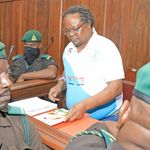
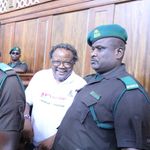
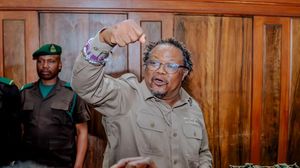
Dar es Salaam. A tense exchange unfolded in court yesterday as Chadema chairman Tundu Lissu and the prosecution traded questions and answers over his understanding of the law, constitutional rights and the legality of protests against laws he considers unjust.
Lissu, who is defending himself against a treason charge, was being cross-examined by Principal State Attorney Nassoro Katuga before a three-judge panel of the High Court sitting in Dar es Salaam.
The exchange formed part of the prosecution’s effort to challenge Lissu’s defence after the court ruled on August 21, 2026 that he had a case to answer following evidence from 17 prosecution witnesses.
Lissu is charged under Section 39(2)(d) of the Penal Code, with allegedly inciting the public on April 3, 2025 to prevent the 2025 General Election through statements including calls to “stop the election” and “incite rebellion”.
Katuga began by reminding Lissu that both were lawyers and that the questioning was intended to assist the court.
Katuga: You are a legal expert, correct?
Lissu: Correct.
Katuga: And an expert in law?
Lissu: Correct.
The prosecutor then tested Lissu’s knowledge of the country’s constitutional order, asking which institution has the final authority to determine legal matters.
Katuga: Under Article 107B of the Constitution, which institution has the final authority?
Lissu: The courts of Tanzania.
Katuga: And in carrying out its functions, the court is not directed by any person or institution?
Lissu: It is not directed.
Katuga: Nor interfered with?
Lissu: It is not interfered with.
The questioning then turned to Lissu’s position as Chadema chairman and whether he had claimed that the position gave him immunity from prosecution.
Katuga: You told the court that being Chadema chairman gives you immunity from prosecution, didn't you?
Lissu: No. I did not say that.
Katuga also challenged Lissu over evidence concerning awards he had received, asking whether he had produced documents supporting his claim.
Katuga: Did you bring those awards to court?
Lissu: I did not, and I am not required to do so.
The prosecutor then questioned Lissu on the principle that the person making an allegation bears the burden of proving it.
Katuga: You have spoken here without producing documents. Are you right?
Lissu: I have no obligation to provide that evidence.
At one point, the exchange became more pointed when Mr Katuga questioned Mr Lissu about statements contained in the prosecution’s case.
Katuga: You said “we will cause trouble”, “we will stop the election” and “we will incite rebellion” statements that were recorded in video. Did you ever say in your evidence that these were not your words and that the entire video had to be watched to understand them?
Lissu: According to your witnesses’ words.
Katuga: I cannot use those words of yours. You have a sound mind. You said they were not yours, didn't you?
Lissu: I do not deny them, and there is no problem.
Katuga later turned to Lissu’s understanding of Tanzania’s colonial history and his past advocacy on mining issues.
Katuga: You said you are a defender of the interests of the poor, particularly on minerals?
Lissu: Yes.
The prosecutor then raised the issue of mineral concentrates, commonly known as “makanikia”, which Lissu had previously opposed being exported.
Lissu disputed having raised the issue in his main evidence but appeared ready to debate it.
Lissu: I did not say that in my evidence. But if you want us to go there, I will tell you about Magufuli’s report that it was professorial rubbish.
Katuga then shifted to Lissu’s claim of expertise in electoral law.
Katuga: You said you are highly knowledgeable in election law?
Lissu: That is true.
The prosecutor asked how citizens could lawfully challenge legislation. Lissu said there were several avenues, including encouraging citizens to use democratic means and approach the courts.
He also argued that peaceful demonstrations were among the lawful methods available.
Katuga: Which law allows demonstrations to oppose legislation?
Lissu: Article 20(1) of the Constitution. Democratic, constitutional and lawful demonstrations, public meetings and speaking through the media can be used as means of seeking changes to the law.
At Katuga’s request, Lissu read Article 20(1) of the Constitution to the court, which provides for freedom of assembly, association and expression, subject to the laws of the country.
When asked whether this was his interpretation of how to change a law that violates the Constitution, Lissu clarified that he was referring to methods outside judicial proceedings.
The cross-examination also moved to previous election-related cases, including those involving lawyer Julius Ishengoma Ndyanabo and the late Christopher Mtikila. Lissu told the court that Ndyanabo had successfully challenged the amount required as security before an election petition could be heard.
He also cited Mtikila’s long-running legal challenge over independent candidates, saying he had won before the High Court, lost at the Court of Appeal and later succeeded before the African Court on Human and Peoples’ Rights.
Lissu further alleged that the Government had refused to implement that judgment.
The exchanges are expected to continue as the prosecution tests Lissu’s evidence and interpretation of the law against the treason charge.
Register to begin your journey to our premium contentSubscribe for full access to premium content