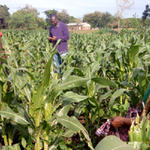
Dar es Salaam. Tanzanian farmers grappling with a sharp fall in grain prices as a result of a bumper harvest have received a major boost after the National Food Reserve Agency (NFRA) unveiled plans to procure 1.2 million tonnes of cereals in the 2026/27 fiscal year.
The move is intended to stabilise the domestic market and strengthen Tanzania’s position as a regional food hub through the export of surplus produce to the East African Community (EAC) and Southern African Development Community (SADC) markets.
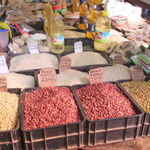
The announcement has brought relief to growers in key producing regions as reports circulating on social media indicate a worrying trend in which a sack of maize in Kiteto (Manyara) and Songea (Ruvuma) has fallen to as low as Sh32,000.
In other areas, including Songwe, Katavi, Rukwa, Dodoma, and Arusha, prices have remained below Sh45,000 per sack, exposing farmers to potential losses.
Speaking in an exclusive interview with The Citizen on Tuesday, June 23, 2026, NFRA acting director of food reserve, Mr Imani Nzobonaliba, assured the public that the government is intervening to provide a reliable market for farmers.
“The NFRA assures the public that it will buy grain this season as it has in previous seasons. Our plan this year is to purchase over one million tonnes.
Of this, the bulk will be maize, alongside approximately 93,000 tonnes of paddy and 7,000 tonnes of sorghum,” he said.
He said the procurement drive is backed by a robust logistics strategy, with the agency inviting large-scale farmers and traders to supply grain through forward contracts.
Mr Nzobonaliba said the response had been overwhelming, with applications totalling about three million tonnes.
To ensure smallholder farmers in remote areas are not excluded, he said NFRA will also establish purchasing centres in hard-to-reach locations.
“We will go to their areas because our main goal is to encourage farmers to continue producing,” he said.
The scale of the operation is reflected in zonal allocations, with Makambako set to receive 140,000 tonnes, Sumbawanga 100,000 tonnes, Arusha 82,000 tonnes, and Shinyanga 74,000 tonnes.
Other zones, including Songwe, Mpanda, Kipawa, and Dodoma, have also been allocated quotas.
A key component of the strategy is a “top-up” pricing model, under which the agency considers both market trends and production costs to ensure farmers remain profitable.
Mr Nzobonaliba said zonal managers were finalising assessments ahead of the official price announcement.
“This is to ensure that when prices are announced, all key factors have been taken into account,” he said.
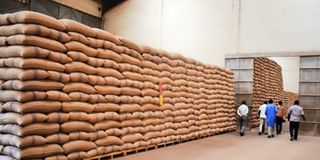
The ambitious procurement comes as data from the Bank of Tanzania (BoT) Monthly Economic Review shows that NFRA currently holds about 500,000 tonnes of grain in storage, against a total capacity of around 770,000 tonnes.
Through stock rotation and trading, the agency is creating space to absorb the new harvest while maintaining strategic reserves.
On the international market, Mr Nzobonaliba said Tanzania is positioning itself as a regional food basket, supplying surplus grain to neighbouring countries.
He said the country is now recognised as a major producer in the region, second only to South Africa.
He said NFRA had already secured a contract to supply 84,000 tonnes of maize to Rwanda, while negotiations were at an advanced stage with the Democratic Republic of Congo (DRC) for 500,000 tonnes and with the Kenya Millers Association, which has expressed strong demand.
Furthermore, he said other potential markets include Malawi, Mozambique, and Zimbabwe, where production is expected to be lower this season.
He said Tanzania’s grain marketing and storage systems are well structured and efficient, allowing rapid aggregation and dispatch: “A customer finds the cargo already prepared for departure.”
“Funding for the programme is expected to be sustained through a self-liquidating model, in which proceeds from grain sales are reinvested, supplemented by government support and financing from commercial banks,” he said.
“The official purchasing season is expected to be announced between July 15 and July 22, 2026,” he added, noting that the government has urged farmers to remain vigilant.
He stressed that farmers should not rush to sell, cautioning that the government is expected to officially open the purchasing season by mid-July.
For The Citizen style, this section can be tightened and made more concise while retaining all key points:
Commenting on the development, a senior lecturer at Sokoine University of Agriculture (SUA), Dr Anna Temu, cautioned that delayed procurement has often undermined NFRA’s efforts to support farmers.
“The government should buy at a fair price to protect farmers, but the challenge is that purchases often start late. Farmers need cash immediately, not weeks later. When the government delays, they are forced to sell to traders because they lack storage facilities,” she said.
Dr Temu stressed that the intervention would only be sustainable if NFRA offered prices that reflect production costs, adding that timely procurement was critical to its success.
Sharing similar views, Agriculture Council of Tanzania (ACT) board chairman, Mr Jitu Soni urged NFRA to create dedicated purchasing channels for smallholder farmers.
He proposed a separate procurement window for farmers, arguing that traders often buy grain at low prices before reselling it to NFRA at a profit.
“A trader may buy maize at between Sh30,000 and Sh40,000 per sack and later resell it to NFRA at Sh60,000. The agency should buy directly from smallholder farmers, so they can at least recover their production costs,” he said.
Mr Soni also suggested that NFRA should operate as a revolving business entity, maintaining a three-year stock cycle to support food security and regional export markets.
He added that with the threat of El Niño-induced weather shocks looming, NFRA’s role in stabilising prices and safeguarding national food security had become even more important.
Register to begin your journey to our premium contentSubscribe for full access to premium content