New EAC Secretary General officially assumes office, outlines priorities
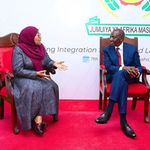
Former EAC Secretary General Veronica Nduva (left) hands over official office documents to the incoming Secretary General Stephen Patrick Mbundi during the formal handover ceremony held at the East African Community Headquarters in Arusha. PHOTO | BERTHA ISMAIL
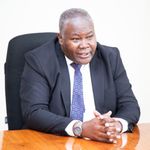
Arusha. Ambassador Stephen Mbundi has officially assumed office as the new Secretary General of the East African Community (EAC), immediately setting his leadership focus on strengthening financial discipline through timely contributions from member states.
Ambassador Mbundi was formally handed over the office during a ceremony held at the EAC Headquarters in Arusha on Saturday, April 25, 2026, by outgoing Secretary General Veronica Nduva.
His appointment follows the decision made on March 7, 2026, during the 25th EAC Heads of State Summit, where he was endorsed as Secretary General for a five-year term running from 2026 to 2031.
Speaking after taking over, Ambassador Mbundi said his immediate priority will be ensuring that partner states meet their financial obligations in a timely manner, describing it as a key pillar for the effective functioning of the Community.
“My first priority is to ensure that member states fulfil their financial commitments by paying their contributions on time,” he said
His focus comes as the EAC prepares to implement a new funding model scheduled to take effect in July 2026.
The model introduces a 50:50 contribution framework, designed to balance equal regional responsibility with the economic capacity of each member state.
Ambassador Mbundi said that improving financial sustainability will go hand in hand with efforts to remove non-tariff barriers (NTBs), which continue to hinder trade within the region.
He said eliminating such barriers will help enhance cross-border trade and boost the competitiveness of goods produced within the EAC.
Beyond financial reforms, Ambassador Mbundi outlined a broader agenda aimed at strengthening intra-regional trade, improving the business environment, and reducing the cost and time of transporting goods across borders.
He also underscored the importance of infrastructure development, particularly road networks, noting that future investments must be climate-resilient to withstand increasing environmental challenges.
“Building infrastructure without considering climate change is risky. We need sustainable investments that can withstand changing environmental conditions,” he said.
Peace and security across the region also feature prominently in his agenda.
Ambassador Mbundi said he will review existing frameworks to ensure they are aligned with current regional realities, while strengthening cooperation and coordination among member states.
He further announced plans to conduct visits to all EAC partner states to engage directly with Heads of State and align regional priorities with national development agendas.
Outgoing Secretary General Ms Nduva, in her remarks, expressed appreciation to member states and EAC staff for their support during her tenure, noting that it enabled her to fulfil her responsibilities effectively.
She said that leadership transitions require a shift in mindset and urged staff to embrace change and support the new leadership structure.
The ceremony also comes as the EAC begins implementing its Seventh Development Strategy (2026–2031), which focuses on accelerating regional integration through investments in infrastructure, energy and technology.
Opening the event, Uganda's Minister of State for EAC Affairs, Mr James Ikuya, highlighted the importance of regional cooperation, noting that financial reforms alone are not enough without deeper collaboration among member states.
“Only through strong cooperation can we overcome the challenges facing our region. We must work together to move the Community forward,” he said.