Government outlines priorities in proposed Sh334 billion tourism, natural resources budget
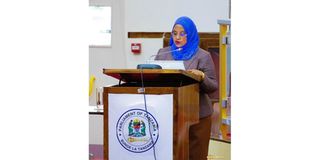
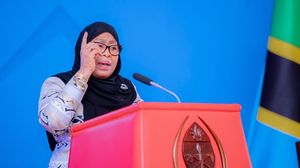
Minister for Natural Resources and Tourism, Ms Ashatu Kijaji, presents the ministry's revenue and expenditure estimates, May 15, 2026. PHOTO | COURTESY
Dodoma. The government has tabled a proposed Sh334 billion budget for the Ministry of Natural Resources and Tourism for the 2026/27 financial year, outlining ambitious plans to boost tourism, strengthen conservation, modernise digital systems and expand tourism infrastructure across the country.
Presenting the budget in Parliament on Friday, Minister for Natural Resources and Tourism, Dr Ashatu Kijaji, said the sector remains a major pillar of the economy and employing millions of people directly and indirectly.
“The sector contributes 30.9 percent of foreign exchange earnings, of which tourism accounts for 25 percent,” she said.
The minister said the government would continue investing heavily in tourism infrastructure, conservation and digital transformation as part of broader efforts to raise the tourism sector’s contribution to GDP from 17 percent in 2025 to 20 percent by 2030.
Among the key priorities in the new budget are the rehabilitation and construction of roads, airstrips, gates and accommodation facilities in protected areas, especially in strategic tourism circuits.
The government has already completed the construction of three airstrips in Nyerere National Park and Ruaha National Park, while construction of the Mikumi airstrip is expected to be completed by October 2026.
In addition, a total of 3,757 kilometres of roads and more than 523 kilometres of walking trails have been built or rehabilitated in protected areas to improve access to tourist attractions.
Dr Kijaji said the government would also continue upgrading tourism service infrastructure, including rest areas, entry gates and tourism information centres in forests and national parks.
She said the investments were already producing results, especially in the southern tourism circuit, where visitor numbers rose from 197,402 to 205,520 between July 2025 and April 2026, while revenues increased from Sh24.6 billion to Sh27.7 billion.
The budget also prioritises digital reforms aimed at improving efficiency in the tourism and conservation sectors.
Dr Kijaji said the ministry had upgraded its portal to improve licensing, tourist bookings, hunting permits and revenue collection systems.
“The improvements are intended to enhance user experience and integrate tourism systems for more efficient service delivery,” she said.
The government has also introduced the Tanzania Travel Companion digital platform, which allows tourists to plan trips, book accommodation and access information about attractions before arriving in the country.
According to the minister, the platform includes AI-powered multilingual support in more than 56 international languages and is expected to play a major role during the 2027 Africa Cup of Nations (Afcon).
On wildlife conservation, the ministry highlighted the successful completion of the national wildlife census, conducted fully using domestic funds for the first time.
“The census results show positive growth and improved wildlife populations across different ecosystems,” Dr Kijaji said, adding that the data would support sustainable hunting, conservation planning and tourism investment decisions.
The government also plans to continue strengthening the beekeeping subsector after honey exports rose by 67.85 percent from 951.6 tonnes in 2024 to 1,596.8 tonnes in 2025. Export earnings increased from Sh11.4 billion to Sh19.2 billion during the same period.
Dr Kijaji said Tanzania had also continued to gain international recognition after winning several global tourism awards, including being named the World’s Leading Safari Destination for the third consecutive year in 2025.
She told Parliament that Tanzania received 5.9 million tourists in 2025, representing a 10.7 percent increase compared to 2024. Tourism earnings rose from $3.9 billion to $4.4 billion during the same period, she said.
The ministry oversees about 307,800 square kilometres of protected land, equivalent to 32.5 percent of Tanzania’s total land area. The areas include 21 national parks, the Ngorongoro Conservation Area, 29 game reserves and 465 forest reserves.