Josephine Christopher is a senior business journalist for The Citizen and Mwananchi newspapers
Mwananchi Communications Limitted
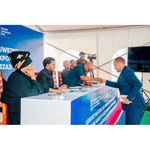
Dar es Salaam. Stanbic Bank Tanzania’s launch of a direct Renminbi (RMB) settlement service could lower payment barriers for businesses trading with China and support Tanzania’s ambitions to expand exports, industrialise and integrate into global value chains, government and financial sector officials have said.
The service, launched in Dar es Salaam yesterday, allows Tanzanian businesses to pay Chinese suppliers and receive payments from Chinese buyers directly in RMB, without first routing transactions through the US dollar.
Speaking at the launch, Deputy Minister for Industry and Trade, Dennis Londo, said the initiative should be viewed beyond the introduction of a banking product, describing it as an important link between finance and trade.
“Today’s launch is more than the introduction of a new banking product. It represents an important step towards strengthening the connection between finance and trade, reducing transaction barriers and creating opportunities for Tanzanian businesses to participate more effectively in international markets,” he said.
Mr Londo said the initiative was particularly relevant as Tanzania implements its Vision 2050 agenda, which seeks to build a prosperous, inclusive, competitive and industrialised economy driven by productivity, innovation, human capital and a dynamic private sector.
He said financial institutions needed to develop solutions covering the entire business cycle, from working capital and investment to exports and internationalisation.
“Market without finance cannot deliver their full potential and finance without productive investment cannot deliver a sustainable transformation,” Mr Londo said.
He called on Tanzanian businesses to take advantage of opportunities in the Chinese market by increasing production, improving quality, complying with international standards, strengthening packaging and embracing technology.
The government, he said, wants to see more Tanzanian enterprises transition from micro to small, small to medium and medium to large businesses, while increasing their participation in regional and global value chains.
Bank of Tanzania Deputy Governor Sauda Maemo said the service comes at a time of deepening trade relations between Africa and China, creating demand for payment systems that are faster, more efficient and less costly.
She said the development should not be viewed simply as a banking product but as part of the financial infrastructure supporting cross-border trade.
“Today’s announcement is not simply about a new banking product, it is indeed about infrastructure,” Ms Maemo said.
China has been Tanzania’s largest trading partner for more than a decade, she said, while many transactions between businesses in the two countries have traditionally relied on intermediary currencies and multiple correspondent banking relationships.
Such arrangements can lengthen settlement times and expose businesses to unnecessary exchange-rate fluctuations, according to the BoT official.
“Direct settlement in Renminbi helps reduce this friction, allowing Tanzania importers and exporters to conduct business more efficiently and competitively,” she said.
The initiative, she added, aligns with the central bank’s broader efforts to modernise Tanzania’s payment ecosystem and strengthen regional and international trade.
Stanbic Bank Tanzania chief executive officer Manzi Rwegasira said the significance of the service extends beyond the bank to the wider Tanzanian economy.
“In 2025, bilateral trade between China and Tanzania reached over $11 billion, an increase of 27 percent from the previous year,” he said.
He said the scale of trade reflected China’s growing importance to the supply chains, investment plans and operations of Tanzanian businesses.
“The question is no longer whether to participate in this opportunity. The question is how to do so more efficiently, more confidently, and with the right financial partner,” Mr Rwegasira said. He said the direct settlement facility would give businesses greater flexibility in payments and help them manage their trade obligations to Chinese suppliers and customers.
Stanbic is offering the service alongside foreign exchange solutions, including spot transactions, forward contracts and options, allowing businesses to manage currency exposure.
Mr Rwegasira said the bank’s proposition goes beyond payments to include trade finance, foreign exchange expertise, working capital solutions and risk management.
“Our ambition is clear: to be the preferred financial partner for Tanzanian businesses to do trade with China,” he said.
Tanzania’s Ambassador to China, Suleiman Haji Suleiman, said the growing trade relationship had also exposed businesses to transaction costs associated with the use of third-party currencies.
He said direct RMB settlement could provide relief by reducing payment friction and improving efficiency, particularly for importers of machinery, tractors and industrial goods.
The service also presents an opportunity for exporters, with Stanbic saying Tanzanian businesses selling agricultural and manufactured products to China can receive payments directly in RMB.
Mr Londo urged Stanbic and other financial institutions to ensure that financial products evolve alongside the needs of the productive economy.
He also called for regular engagement between Stanbic, the Ministry, business associations and other stakeholders to identify implementation challenges and develop practical solutions.
The Stanbic service is available to corporate, commercial, SME and retail clients and is being delivered in line with Bank of Tanzania regulatory guidelines.
Register to begin your journey to our premium contentSubscribe for full access to premium content