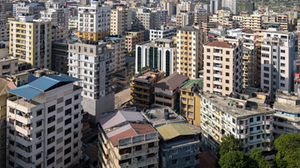
The story of Tanzanian healthcare is written in the corridors of Muhimbili National Hospital. Established in 1905, it has evolved from a colonial medical centre into a sprawling symbol of national significance. Muhimbili isn’t just a hospital; it is a system—the sole apex of excellence, the primary training hub for our specialists, and the final hope for every Tanzanian facing a complex medical situation.
But today, we stand at a crossroads. The government is moving forward with a massive Sh1.2 trillion investment, funded by a loan from South Korea, to build a “new Muhimbili”. While the ambition is commendable, the rationale behind doubling down on a single monolith is deeply misguided. We are attempting to solve 21st-century health complexities with a mid-20th-century blueprint.
The “one apex hospital” model was born when the nation was young and experts were few. In that era, concentration was a necessity. But Tanzania is not a city-state: it is vast, dispersed, and uneven in infrastructure. The model that assumed that excellence can be concentrated in one place and accessed by all has now become not just a bottleneck but a health risk factor.
Nowhere is this clearer than in cancer care. In 2021, Tanzania had about 120,000 people living with cancer. By 2030, projections suggest 800,000 new cases. If current mortality trends persist, at least 80 percent will die not because treatment does not exist, but because it often comes too late. Patients are diagnosed late, referred late, and arrive at specialised centres when the disease is already terminal. Apparently, quality care is still dependent on a bus ticket to Dar es Salaam.
The fallacy of the monolith
The debate in Parliament recently highlighted this tension. While the government justifies the 1.2 trillion budget by citing the “sprawling, inefficient layout” of Muhimbili buildings and a need for international accreditation, critics argue that these funds would be better spent upgrading regional hospitals to decentralise services.
The government’s plan involves a seven-phase construction to accommodate 1,300 patients vertically. But even with 1,300 beds, Muhimbili cannot possibly serve a nation of 70 million. We are investing in a facility that will be congested the day it opens because it remains the only “national” option for a desperate population.
A better way
Most mature health systems have evolved from singular monoliths to specialised networks. For example, India’s AIIMS was originally a singular “Muhimbili-style” monolith in New Delhi. However, India realised that a billion people could not travel to one city for tertiary care. So, they established over twenty regional AIIMS institutions across India, each a “National Hospital” in its own right, with its own research and training capacity.
The global trend is clear: progress lies in distributing excellence, not concentrating it. We must follow this path of functional specialisation and geographic equity. So, instead of sinking Sh1.2 trillion into one campus in Upanga, let’s think of a strategic redistribution. We could take that same investment and allocate Sh200 billion each to six strategic regional hubs: say Arusha, Dodoma, Mwanza, Mbeya, Mtwara, and Mloganzila.
An alternative model: The “Sh200 billion plan”
With this investment, these wouldn’t just be “upgraded” hospitals; they would be national centres of excellence right where people are. One could become the national lead for orthopedics, another could focus on paediatrics. A mother in Mbeya wouldn’t need to travel 800 kilometres for a specialised surgery. With increased specialisation, we would decentralise the “academic ecosystem”, training doctors and nurses in the environments where they are most needed.
What does Sh200 billion buy? At Bugando, it buys an international oncology powerhouse serving tens of millions in the Lake Zone and neighbouring countries. This investment delivers a 300-bed complex, radiotherapy bunkers treating hundreds daily, and EAC’s fourth PET-CT scanner. It procures multiple LINACs and doubles national specialised capacity by training 60 oncologists in five years.
Rethinking Muhimbili
Our obsession with Muhimbili ignores the potential of other facilities. Muhimbili can’t serve the needs even of the residents of Dar alone. So, we must transform the likes of Mwananyamala, Amana, and Temeke into high-capacity tertiary facilities. When these hospitals are weak, Muhimbili stops being a specialist centre and starts acting as a primary care clinic for Dar.
Conclusion: Not just buildings
The fact that the current Muhimbili site is a strategic national priority is irrefutable. But an investment of Sh1.2 trillion is not just about real estate, it is a statement of our national values. If we spend this money only on the “monolith,” we are choosing visibility over access. We are building a “medical city” in Dar while the rest of the country remains a medical desert.
Tanzania has a significant potential for medical tourism. But that doesn’t come from one building with 1,300 beds. It comes from a robust, resilient, and distributed network of specialised care.
So, let us redesign the system. Let us ensure that the next generation of Tanzanians doesn’t die of terminal distance, but lives because excellence was brought to their doorstep.
The future isn’t a single national hospital but a network of specialised centres providing gold-standard healthcare.