Four priorities shape Zanzibar’s Sh5.7 trillion 2026/27 development plan
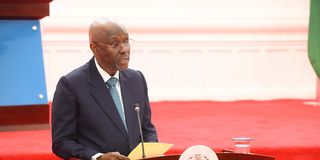
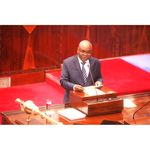
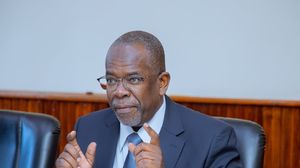
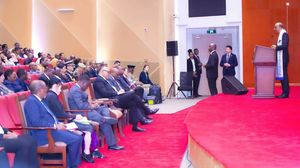
Zanzibar Finance Minister, Dr Juma Malik Akil, presents the state of the economy and development plan to the House of Representatives in Chukwani, Unguja, on Thursday, June 11, 2026. PHOTO | JESSE MIKOFU
Unguja. The Revolutionary Government of Zanzibar (RGZ) has set out the direction of its 2026/27 development plan, identifying four key strategic priority areas while expecting to spend Sh5.7 trillion in implementation.
The priority areas are strengthening economic reforms, enabling infrastructure, developing human capacity and social development, and enhancing good governance and resilience.
Of the total budget, Sh4.433 trillion, equivalent to 76.72 percent of the development budget, will come from domestic revenue, while Sh1.345 trillion will be grants and loans, accounting for about 23 percent from development partners.
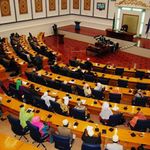
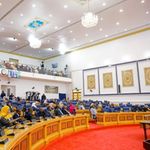
This was stated on Thursday, June 11, 2026, by the Minister of Finance and Planning, Dr Juma Malik Akil, while presenting the Island state of economy and direction of development plan to the House of Representatives in Chukwani, Unguja, Zanzibar.
“The amount is expected to support the implementation of 38 programmes and 54 development projects.
This represents an increase of 27.30 percent compared to the 2025/26 development budget estimate of Sh4.539 trillion,” he said.
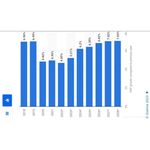
Dr Malik said preliminary figures show that Zanzibar’s economy is projected to grow by 7.5 percent in 2026, up from 7.0 percent in 2025.
“The government will continue implementing policies and strategies to develop deep-sea maritime infrastructure, marine product processing industries, and marine and island tourism,” he said.
He added that the government will also strengthen commercial agriculture and food security and improve access to both public and private sector employment, with a total of Sh669.94 billion expected to be spent in this area.
He said the population of Zanzibar is increasing annually, necessitating accurate statistics to support effective development planning.
For the 2026/27 financial year, the government plans to spend Sh3.797 trillion, equivalent to 65.71 percent, on strategic development projects and Sh1.381 trillion on other projects, including those not completed in the 2025/26 financial year.
Within the plan, Sh600 billion has been allocated for the Debt Repayment Fund for development projects.
To ensure the provision of quality social services, the government will continue to strengthen infrastructure and services in health, education, sports, and social protection systems, with Sh1.275 trillion expected to be spent.
“The government will continue to strengthen security and justice delivery systems to ensure the country remains stable and peaceful, while also addressing climate change, with Sh216.95 billion expected to be spent,” he said.
Economic growth
Explaining factors expected to drive economic growth to 7.5 percent, Dr Malik said the increase in tourist arrivals, projected to rise by 9.3 percent from 917,167 in 2025 to 1,002,917 in 2026.
Other contributing factors include the implementation of major development projects such as urban and rural road infrastructure, airport construction, and port development.
Additional drivers include improved revenue collection efforts and enhanced government expenditure management.
He said growth also depends on improved fiscal policy management, increased availability of oil and gas energy to reduce energy costs, and increased investment in manufacturing to add value to products for domestic use and export, alongside continued national and regional stability.
However, Dr Malik said economic growth may fall below the projected 7.5 percent average if the ongoing conflict involving the United States and Israel against Iran persists for a long period and affects key economic sectors, including tourism, transport, investment, and trade.
He said in light of global economic trends, the government is proposing decisive policy measures to mitigate such risks and strengthen Zanzibar’s economic resilience in 2026.
“These will focus on fiscal policy, financial discipline, and external sector management, domestic production, improving the business and investment environment, and strengthening social protection systems,” he said.
Overall, effective implementation of these policies will enable Zanzibar to reduce the impact of external shocks, strengthen economic stability, and safeguard growth projections for 2026 despite ongoing global challenges.