East African youth told to harness Kiswahili for innovation, employment
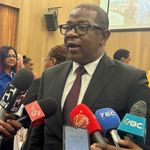
Dr Caroline Asiimwe, Executive Secretary of the East African Kiswahili Commission (Kakama), speaks to editors and reporters at Mwananchi Communications Limited (MCL) in Dar es Salaam on Thursday. Beside her is EALA member Dr Abdullah Makame.

Dar es Salaam. Youth in East African countries have been urged to be innovative and tap into the opportunities created by the growing prominence of Kiswahili, not only to earn a living but also to create jobs for others.
The call was made on Thursday, February 12, 2025, in Dar es Salaam by the East African Kiswahili Commission (Kakama) executive secretary, Dr Caroline Asiimwe, during a visit to Mwananchi Communications Limited (MCL) offices as part of celebrations marking the commission’s 10th anniversary.
Dr Asiimwe said the recognition of Kiswahili as an official international language has generated numerous opportunities, including translation and interpretation, teaching Kiswahili to foreigners, publishing, arts, writing, and related fields.
She noted that even in this era of technological advancement, a young professional with skills in Kiswahili can contribute to creative teams developing software, focusing on the language component.
However, she stressed that the continued growth of Kiswahili requires guidelines to regulate its formal use.
“For those using this language for official purposes, for example, in translation, interpretation, or teaching, there is a need to formalise their work and provide guidelines so that they understand the rules and standards they must follow,” she explained.
She added that formalising the profession would help reduce cases where unqualified individuals undertake translation or interpretation work, which often results in inaccuracies, especially on digital platforms.
Dr Asiimwe cited examples of people using Artificial Intelligence (AI) for translation without understanding basic principles, leading to misinterpretation.
“Some people take on translation or interpretation tasks simply because they speak Kiswahili, but if you assess the quality of their work, it is often substandard,” she said.
Growth of Kiswahili in East Africa
Speaking on the expansion of Kiswahili in the East African region, Dr Asiimwe said the language has flourished to become one of the official and widely used languages of communication among member states.
“We are proud that Kiswahili has now grown and been recognised as one of the official languages and a language of wider communication within member countries,” she said.
Following approval by the heads of member states, Kiswahili was formalised alongside English and French as an official language.
The East African Legislative Assembly (EALA) Member from Tanzania, Mr Abdullah Makame, emphasised the importance of implementing directives and guidelines on promoting and using the language correctly.
He noted that despite the existence of policies and guidelines, challenges persist in their implementation, at times resulting in decisions being made outside established procedures, which can undermine efforts to promote Kiswahili both nationally and internationally.
“There has been limited progress in implementing directives and strategies for Kiswahili usage, partly due to delays in drafting and revising legal regulations,” he said.
The legislator urged society to stop disregarding local cultures, including Kiswahili, in favour of foreign languages, stressing that such attitudes weaken efforts to elevate the language globally.
On the commission’s achievements, Dr Asiimwe highlighted various collaborative projects between Tanzania and other countries aimed at promoting Kiswahili, including academic exchanges allowing experts and students from neighbouring countries, such as Uganda, to learn and share experiences on the language.
“This shows that Kiswahili is not just a Tanzanian language but a regional and international resource. It is our duty to ensure its quality is maintained through formal policies and guidelines,” she emphasised.
MCL’s Head of Training, Mr Rashid Kejo, said the company supports efforts to promote Kiswahili through content production and dissemination in the language.
“We at Mwananchi support and are key stakeholders in developing and promoting Kiswahili, as our content is produced and disseminated in Kiswahili through our newspapers, Mwananchi and Mwanaspoti, excluding The Citizen, which is published in English,” he said.
As part of the 10th anniversary celebrations of Kakama, various Kiswahili stakeholders and citizens from eight East African Community countries; Burundi, Democratic Republic of Congo (DRC), Kenya, Rwanda, Somalia, South Sudan, Uganda, and Tanzania, are expected to meet on Saturday, February 14, 2026, in Zanzibar to assess and discuss the future of Kiswahili in East Africa.