Dar es Salaam. The debate over Tanzania’s emerging “two-tier” public education system has moved beyond questions of infrastructure and classroom shortages.
It is now raising a deeper national concern: whether the country is gradually creating two different futures for its children based on their parents’ ability to pay.
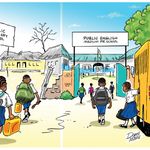
Across the country, a growing number of public schools now operate parallel systems. One stream offers enhanced English instruction, smaller classes and better learning facilities, often supported by parental contributions.
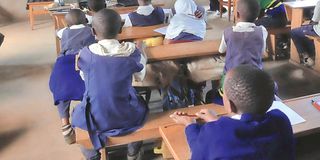
The other serves the majority of learners under the traditional Kiswahili-medium arrangement, frequently grappling with overcrowded classrooms, teacher shortages and limited resources.
Education experts warn that unless deliberate action is taken, these disparities could undermine the constitutional principle of equal opportunity and weaken the social cohesion that public education has historically promoted in Tanzania.
The challenge is not unique to Tanzania. Around the world, governments have faced similar tensions between expanding access to education and maintaining quality.
However, specialists argue that successful countries have addressed such challenges not by creating privileged islands of excellence but by systematically improving standards across the entire public education system.
A system divided by resources and opportunity
For Dr Thomas Jabir, an education expert in Dar es Salaam, the solution begins with a fundamental shift in resource allocation.
“We cannot build a strong education system by concentrating quality in a few schools while the majority struggle,” he argues. “The goal should be to ensure that every public school offers an environment where a child can learn effectively regardless of where they come from.”
His concerns are supported by recent evidence showing that some English-medium streams enjoy significantly better pupil-teacher and pupil-classroom ratios than their Kiswahili-medium counterparts.
While some schools record a pupil-teacher ratio of about 1:55 in English-medium classes, the ratio exceeds 1:63 or more in regular streams. Similar disparities exist in classroom space.
The Controller and Auditor General (CAG) has repeatedly highlighted infrastructure challenges across the education sector, urging the government to develop a sustainable long-term plan to modernise school facilities, learning equipment and teaching resources.
Analysts argue that addressing these gaps system-wide would reduce the pressure on schools to create premium streams that rely heavily on parental contributions.
The financial dimension of the issue remains equally significant.
Although Tanzania introduced fee-free basic education in 2016, parents in some public schools continue to pay between Sh300,000 and Sh600,000 annually for enhanced learning programmes. In many cases, these costs place quality education beyond the reach of low-income households.
Education policy analyst Mbwana Ally believes the trend risks undermining the original spirit of fee-free education.
“The danger is that we begin to normalise inequality within public education,” he says. “Once quality becomes something that must be purchased, public education ceases to be a tool for social mobility and becomes a mechanism for reinforcing existing inequalities.”
Mr Ally notes that countries that have achieved equitable education systems have generally avoided creating parallel pathways based on family income. Instead, they have focused on strengthening quality across the board.
The language dilemma and the quest for quality
Finland offers one of the most frequently cited examples. Despite consistently ranking among the world’s top-performing education systems, Finnish schools operate with minimal variation in quality between regions and communities.
Rather than concentrating resources in elite institutions, the country invests heavily in teacher quality, school support services and equitable funding mechanisms.
Singapore presents another useful case study. While the country emphasises English proficiency as a tool for global competitiveness, it invested heavily in teacher training and curriculum development before expecting all learners to perform in English.
The result was not the creation of separate language-based streams but a national system where language competence became a shared educational goal.
The question of language remains one of the most contentious issues in Tanzania’s education sector.
For decades, researchers have highlighted the disconnect between Kiswahili-medium primary education and English-medium secondary schooling.
Studies have shown that many learners struggle during the transition from Standard Seven to Form One, not necessarily because they lack academic ability, but because they suddenly encounter a language barrier.
Researcher Japhet Makongo argues that the emergence of English-medium public schools reflects a broader lack of clarity on the country’s language policy.
“If we are convinced that English gives learners better opportunities, then we should make it available to all children,” he says. “If it is important, it should not be reserved for those who can afford additional fees.”
His argument echoes recommendations made by several education studies over the years.
Reports produced by organisations such as HakiElimu, the Uwezo learning assessments and various academic studies from Tanzanian universities have consistently called for a coherent language policy that balances the strengths of Kiswahili as a language of learning with the importance of English as a language of international communication.
Rather than maintaining separate streams, experts increasingly advocate a bilingual approach that strengthens English instruction from the earliest years while preserving Kiswahili’s central role in learning and national identity.
Education expert Richard Mabala argues that such an approach would also resolve what he describes as a “pedagogical nightmare” in secondary schools.
“When learners arrive in Form One with completely different language backgrounds, teachers face an impossible task,” he explains. “They either move too quickly for some students or too slowly for others. A unified system would benefit everyone.”
Yet infrastructure and language reforms alone will not solve the problem.
Experts further point to teacher development as the single most important factor in improving educational outcomes.
A study by education specialist Lucy Ringo titled Teachers’ Competence in English Language Teaching in Tanzanian Primary Schools, found that a large majority of teachers surveyed had not received recent professional training, limiting their ability to adapt to changing classroom demands.
“Quality education depends on quality teaching,” Ms Ringo notes. “Teachers need continuous support, mentoring and opportunities to update their skills.”
This finding aligns with recommendations from the Research on Improving Systems of Education (RISE) Programme, which has consistently emphasised the importance of continuous professional development rather than one-off training workshops.
Countries such as Singapore and Finland have demonstrated that sustained investment in teachers often delivers greater educational gains than expensive infrastructure projects alone.
In these systems, professional learning is embedded into teachers’ careers, ensuring that classroom practice evolves alongside curriculum reforms.
Ultimately, experts say lasting change will require stronger accountability mechanisms.
Article 11 of Tanzania’s Constitution recognises education as a fundamental right.
However, education advocates argue that Parliament must play a more active oversight role to ensure policies and budgets reflect that constitutional commitment.
The National Assembly, they argue, should closely monitor the implementation of recommendations issued by the CAG, School Quality Assurers and education researchers to ensure reforms reach every school rather than a select few.
The stakes extend far beyond examination results.
Education remains one of the most powerful tools for reducing poverty, promoting social mobility and building national unity.
A system divided between those who can pay for enhanced opportunities and those who cannot risk creating social and economic divisions that could persist for generations.
For Tanzania, the challenge is clear. The country must decide whether quality education will remain a privilege available to a few or become a guarantee enjoyed by all.
Register to begin your journey to our premium contentSubscribe for full access to premium content