Dodoma/Dar. The government has said it is finalising reforms to the Universal Health Insurance system, with the second phase of citizen registration introducing a Sh150,000 annual package for households of up to six people, with each eligible household to be enrolled accordingly.
The reforms are aimed at improving efficiency in service delivery management, containing treatment costs and creating a more conducive environment for the effective implementation of the programme.
On Monday, May 11, 2026, the Ministry of Health sought parliamentary approval for a Sh1.8 trillion budget for the 2026/27 financial year, explaining that the second phase, targeting 589,000 households, is designed to register both poor households and citizens who are able to pay for themselves, in line with its phased rollout plan.
Universal Health Insurance is among six key priorities in the ministry’s plan and budget for the 2026/27 financial year, which covers recurrent expenditure, revenue and development projects within the broader financial planning framework aligned to national health sector priorities and implementation strategy.
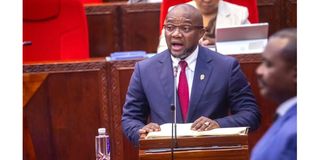
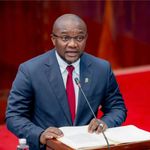
Presenting ministry’s revenue and expenditure estimates in Parliament in Dodoma yesterday the minister responsible for the docket Mr Mohamed Mchengerwa said the new phase seeks to expand access to healthcare services for more citizens through a household-based insurance system model.
“For now, we are finalising reforms to the Universal Health Insurance system to enhance efficiency, control costs and support the launch of the second phase of citizen registration, which will cost Sh150,000 annually for households of up to six people,” he said.
He said under the programme, households will pay Sh150,000 annually for healthcare services covering a family of up to six people, a move aimed at reducing financial burdens and ensuring Tanzanians access services without financial barriers.
Mr Mchengerwa said the Universal Health Insurance Act endorsed in 2023 aims to ensure every Tanzanian receives reliable healthcare services without being constrained by costs.
The minister said the second phase will register 589,000 households, including poor families as well as citizens in both the formal and informal sectors, respectively.
He added that the government has continued to improve registration and management systems for the insurance scheme in order to enhance efficiency, curb fraud and simplify access to health services nationwide.
According to him, in the first phase, 172,297 households had already been reached, equivalent to 62 percent of the initial target, while 463,000 citizens had benefited from services under the system.
Singida West MP Elibariki Kingu urged the government to explore financing the Universal Health Insurance scheme through mobile money transactions, while cautioning against introducing new levies.
He said his research showed that about Sh158.4 trillion is transacted annually through mobile networks, arguing that a deduction of at least Sh10 per transaction could generate about Sh4 trillion annually.
“I am not proposing the introduction of a new levy that would burden Tanzanians overall. Use this arrangement, engage the youth; they are ready to offer methods.
Deduct a small amount, at least Sh10 or even five shillings, and you will collect money and start providing quality services immediately at scale,” he said, stressing, “Start tomorrow, not someday.”
He added that no Tanzanian would object to a small deduction if they were assured of quality healthcare services, adequate medicines, skilled doctors and improved infrastructure.
In the budget, Mr Mchengerwa said the ministry has requested Sh1.8 trillion, of which Sh1.148 trillion, equivalent to 64 percent, will go to development projects, while Sh652 billion will be used for recurrent expenditure.
Of the recurrent budget, Sh516 billion will cover salaries of health workers and Sh135 billion will cater for other operational costs.
He said the funds will be directed towards strengthening health infrastructure, procuring medical equipment, expanding specialised services and implementing the Universal Health Insurance programme rollout.
On disease trends, Mr Mchengerwa said 39.9 million people received treatment services during the 2025/26 financial year, with respiratory infections, urinary tract infections (UTIs), malaria and diarrhoea leading in hospital visits nationwide.
He said out of 36,996,862 patients, 35,260,883 were treated as outpatients while 1,735,979 were admitted.
He added that skin conditions, hypertension and non-communicable diseases (NCDs) remain major health challenges.
Additionally, 55,300 patients were treated under President Samia’s Specialist Doctors Programme in 184 councils.
The minister noted that despite improved access to healthcare, Tanzania is experiencing a rising burden of non-communicable diseases.
He said while infectious diseases still dominate, conditions such as high blood pressure, diabetes and joint diseases have now entered the top 10 causes of hospital admissions, driven by lifestyle changes including poor diets, alcohol abuse, smoking and lack of exercise.
On parliamentary oversight, Deputy Chairperson of the Health and HIV/AIDS Committee, Dr Zeyana Abdallah Hamid, warned that delays in disbursement of development funds were putting major health projects at risk.
She cited projects such as the Dodoma Mother and Child Hospital, regional referral hospital renovations and specialised centres.
The committee also raised concern over a Sh302.2 billion debt owed to the Medical Stores Department (MSD), saying it was affecting the agency’s ability to procure and distribute medicines efficiently, and urged the government to provide urgent capital support.
Dr Hamid also called for timely budget implementation and stronger revenue collection to address persistent financing challenges in the health sector.
Contributing to the debate, Special Seats MP Neema Mgaya, CCM, said Tanzania’s Vision 2050 targets the country becoming a medical tourism hub, urging Muhimbili National Hospital to meet international standards.
She said Tanzania has received 23,000 patients since 2022.
Special Seats MP, Ms Jacquline Kainja, CCM, called for stronger collaboration with the private sector to improve maternal healthcare infrastructure and reduce maternal and child deaths.
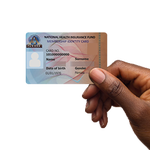
Singida Urban MP, Ms Yagi Kiaratu, urged the government to curb fraud involving misuse of health insurance cards.
Parliament is expected to continue debating the budget before approving the Sh1.8 trillion request for the Ministry of Health for the 2026/27 financial year.