Taxing the treaty: The fiscal maze facing EA trade
By Edditrice Marco
In my previous personal commentary published on May 25, 2026, titled "Can the Samia-Ruto $1 billion target finally break the structural wall?" I discussed the positive momentum generated by diplomatic engagements between our regional heads of state.
In that analysis, I highlighted the shared commitment of Tanzania’s President Samia Suluhu Hassan and President William Ruto of Kenya to address long-standing trade blocks and target an ambitious $1 billion bilateral trade volume. Recently, I became keen to learn what progress has been made against the June 30th deadline for the Non-Tariff Barriers (NTBs) milestone. My research confirms some key positives.
Today, the early phases of that cooperation are yielding measurable operational shifts. According to data tracked by the East African Business Council, the cross-border business landscape has seen streamlined customs processes, easing trade lanes for over 300 registered companies across 49 key product categories such as iron, steel, cement, and furniture.
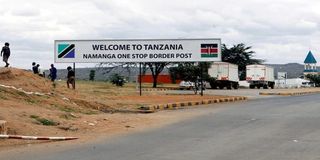
At major physical border posts like Namanga and Holili, joint administrative efforts have successfully reduced cargo dwelling times by over 60 percent, bringing clearance windows down to a matter of hours.
From a banking perspective, however, observing this physical infrastructure optimisation is only part of the equation. Long-term financial forecasting requires evaluating how these agreements interact with domestic fiscal frameworks.
While physical border checkpoints are operating with increased efficiency, the region's current fiscal budget cycles are introducing new operational variables through national tax legislations.
This dynamic represents a broader regional trend where member states balance community-wide treaties with domestic revenue requirements. Following high-level discussions on trade barriers, East African Community (EAC) member states frequently update their national budget frameworks with fiscal measures designed to manage internal markets.
Consider these recent policy adjustments:
Kenya has introduced fiscal updates affecting regional trade, including a 35 percent excise duty on imported glass bottles and adjusted tariffs on furniture imports.
Uganda has expanded its sensitive products framework, applying import duties ranging from 36 percent to 60 percent on certain processed foods, household consumables, and building materials from neighbouring states.
Tanzania has similarly instituted targeted measures, adjusting local duties to 35 percent on imported doors, windows, and ceramic tiles to support local industrial capacity.
For the trade finance sector, these fluctuating tax models introduce vital parameters for credit risk evaluation. When a financial institution structures a capital expenditure loan for an agribusiness or manufacturing client, repayment models depend heavily on predictable market access and stable cash margins.
A sudden shift in import or export tariffs via a domestic Finance Act can compress a borrower's net income, directly affecting their debt-burden ratio (DBR).
If trade cycles slow down due to cross-border tariff adjustments, healthy business accounts may experience liquidity pressures that increase the risk of non-repayment of credit obligations.
As commercial banks expand their cross-border participation across the EAC market, prudent risk underwriting must look beyond historical financial statements. Risk matrices must proactively stress-test corporate loan books against ongoing national regulatory and fiscal volatility.
While top-level political goodwill remains clear, the structural alignment of individual national tax legislations with regional treaties is an evolving process.
Until these frameworks reach complete synchronization, financial institutions must serve as proactive watchmen of cross-border risk. The trade gates may be swinging open at the physical borders, but on bank balance sheets, proper risk guardrails must remain an operational priority.
Edditrice Marco is the Senior Regional Manager at Stanbic Bank, Tanzania. The views expressed in this article belong solely to the author and do not reflect any position of her employer.